

Quick Summary: Soccer Betting Mistakes to Avoid Before the World Cup
Soccer betting mistakes usually happen when bettors confuse probability with certainty. A favorite is not guaranteed to win. A longshot with huge odds is not automatically a smart pick. Home advantage is not always simple, especially in a World Cup played across multiple host countries and neutral venues.
The safest way to think about soccer betting is this: every bet has a price, a probability, and a risk. Good strategy begins by avoiding bad assumptions.
This guide explains the biggest soccer betting mistakes new and intermediate bettors make, including overvaluing favorites, chasing longshots, ignoring draw risk, misunderstanding home advantage, overusing parlays, and confusing high odds with value bets.
 soccer betting mistakes explained with favorites longshots home advantage and value bets
| Mistake | Better Way to Think |
| Betting favorites as “safe” picks | Favorites have higher probability, not certainty |
| Chasing longshots | Big payout does not always mean value |
| Ignoring draw risk | Soccer has three-result markets |
| Misreading home advantage | Venue and tournament context matter |
| Confusing value with high odds | Value means your probability beats market probability |
| Overusing parlays | More legs create more failure points |
| Ignoring bankroll limits | Set a budget before betting |
The goal is not to find a guaranteed system. The goal is to make calmer, clearer, and more responsible betting decisions.
What Are the Most Common Soccer Betting Mistakes?
The most common soccer betting mistakes come from misreading probability, price, and context. Soccer is low-scoring, draws are common, and one mistake can change the match. That makes betting on soccer different from betting on sports with higher scoring or only two main outcomes.
A beginner might think, “Brazil are better, so Brazil will win.” That may be reasonable as a football opinion, but it is not enough as a betting decision. The real question is whether the odds fairly reflect Brazil’s chance of winning.
| Mistake Category | Example |
| Probability mistake | Thinking favorites are guaranteed |
| Price mistake | Thinking high odds always mean value |
| Market mistake | Forgetting the draw in 1X2 betting |
| Context mistake | Ignoring rotation, travel, and injuries |
| Discipline mistake | Betting too many matches |
| Promotion mistake | Claiming bonuses without reading terms |
| Bankroll mistake | Chasing losses after one bad result |
Good soccer betting strategy starts with avoiding bad assumptions. You do not need to bet every match, chase every big payout, or force a pick because the World Cup is exciting.
The best approach is slower: understand the market, compare the price, check the context, and decide whether the risk is worth it.
Mistake 1: Treating Favorites as Guaranteed Winners
One of the biggest soccer betting mistakes is treating favorites like automatic winners. A favorite has shorter odds because the market sees that team as more likely to win, not because the result is guaranteed.
A World Cup favorite can dominate possession, create chances, and still draw 1–1. A red card, penalty, injury, goalkeeper mistake, or one counterattack can change everything.
| Favorite Signal | What It Means | What It Does Not Mean |
| Short odds | Higher implied probability | Guaranteed win |
| Strong squad | Better talent level | No upset risk |
| Public support | Popular betting side | Fair price |
| Recent good form | Positive trend | Certain repeat performance |
| Big-name nation | Strong reputation | Automatic value |
This is especially important when betting on favorites during the World Cup. Public teams often attract attention because fans know their stars. That can make the price feel safe even when the odds have already shortened.
Better way to bet favorites
Before betting on a favorite, ask:
| Question | Why It Matters |
| Is the favorite fairly priced? | A good team can still be a bad price |
| Is the draw a real risk? | Soccer has three-result markets |
| Are key players fit? | Lineups can change probability |
| Does the match situation matter? | Group-stage incentives can shift |
| Is public demand affecting the price? | Popular teams may become expensive |
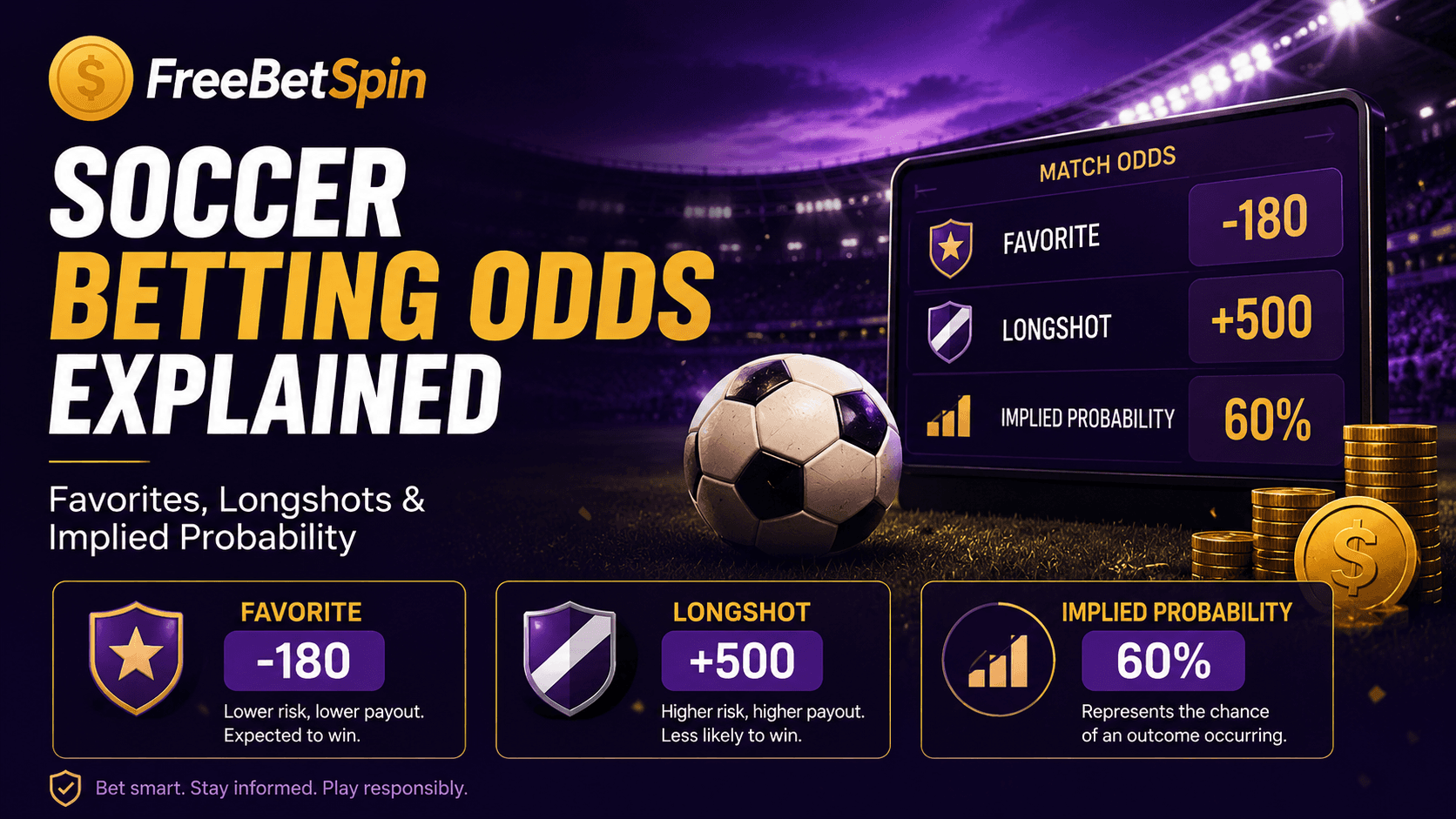
If you are still learning how odds express probability, Freebetspin’s soccer betting odds explained guide breaks down favorites, longshots, implied probability, 1X2 betting, and Asian Handicap in simple terms.
Mistake 2: Chasing Longshots Because the Payout Looks Big
Longshot betting is tempting because the payout looks exciting. A +900 underdog or +2500 tournament futures pick can make a small stake feel powerful.
But high odds usually exist for a reason. The market is saying the outcome is less likely.
That does not mean every longshot is a bad bet. It means the payout alone is not enough. A longshot should still make sense when compared with its realistic probability.
| Longshot Type | Why It Looks Attractive | Main Risk |
| Big underdog | Huge return for small stake | Upset is unlikely |
| Correct score | Very high odds | Exact result required |
| Outright futures | Exciting tournament payout | Many matches must go right |
| Multi-leg parlay | Small stake, big number | Every leg must win |
| Player prop longshot | Fun storyline | Specific event must happen |
A common beginner mistake is thinking, “It only costs $5.” That may be true, but repeated longshot betting can add up quickly.
Better way to judge longshots
Before betting a longshot, ask:
| Better Question | Why It Helps |
| What probability do the odds imply? | Shows what the market is pricing |
| What needs to happen for this to win? | Reveals hidden difficulty |
| Is there team news supporting the bet? | Avoids random guessing |
| Is the market already overhyped? | Public underdog stories can distort price |
| Would I still like it without the big payout? | Tests emotional bias |
Longshots can be fun when used carefully, but they should not become your main World Cup betting strategy.
Mistake 3: Confusing High Odds With Value Bets
Another major soccer betting mistake is misunderstanding the meaning of a value bet. A value bet is not simply a bet with high odds. It is a bet where your estimated probability is higher than the market’s implied probability.
That is the whole idea: probability versus price.
| Your Probability View | Market Implied Probability | Value? |
| You estimate 45% | Market implies 38% | Possible value |
| You estimate 20% | Market implies 25% | Not value |
| You like +800 odds | True chance may be 7% | Not automatically value |
| Favorite looks boring | Market may still underprice it | Possible value |
High odds only tell you the payout is large. They do not tell you the bet is good. A +1000 outcome can still be overpriced if the realistic chance is lower than the implied probability.
Value bet meaning in plain English
A value bet means you believe the market price is too high for the real chance of the outcome.
For example:
| Example | Simple Meaning |
| Market implies 30% | Odds price the outcome as roughly 30% likely |
| Your analysis says 38% | You think the outcome is more likely than the market says |
| Possible value exists | Your probability view beats the market price |
This does not guarantee the bet wins. It only means the price may be better than the probability suggests.
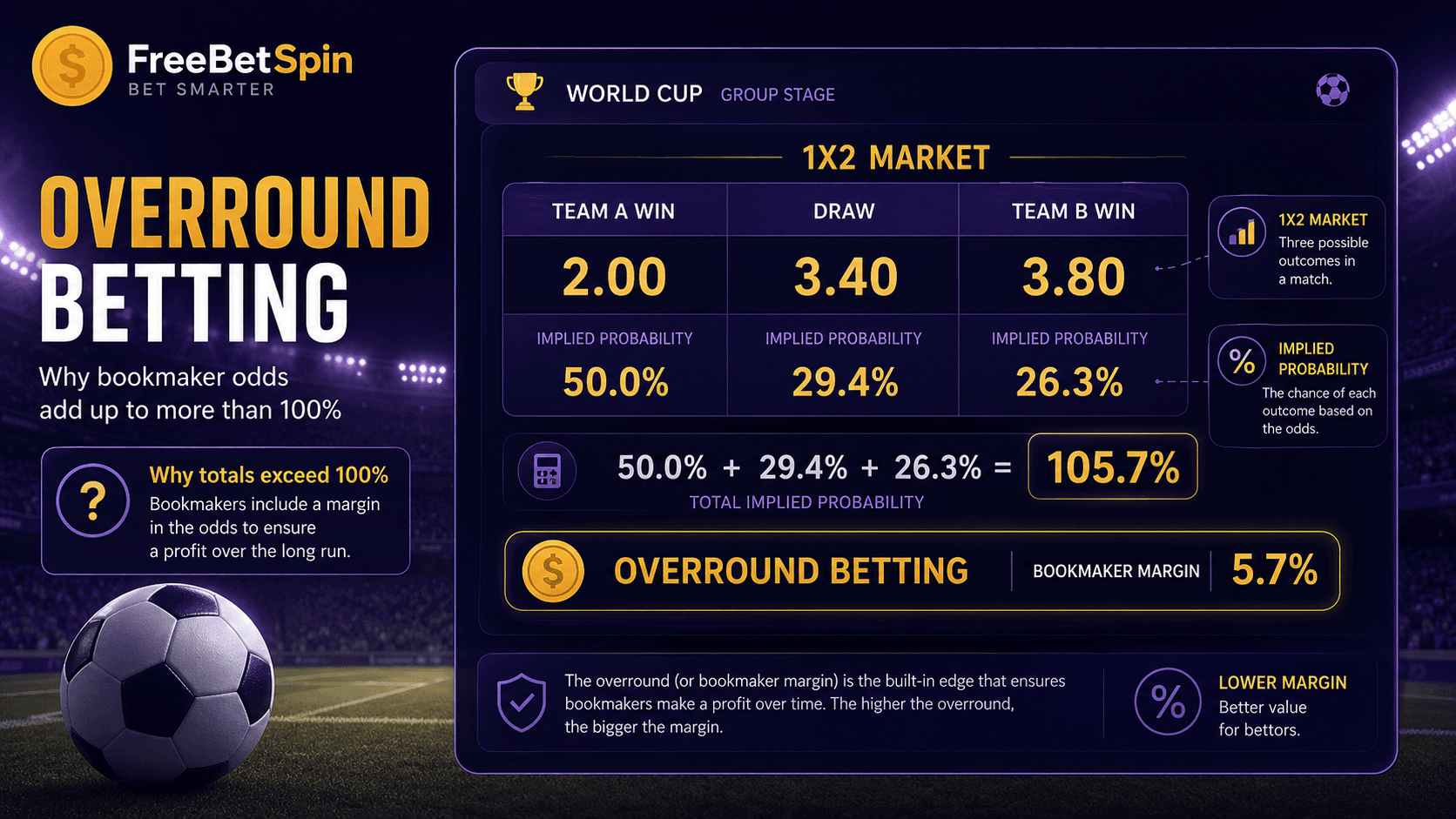
If you want to understand how bookmaker margin affects implied probability, read Freebetspin’s overround betting explained guide. You can also review Smarkets’ educational implied probability guide for a simple explanation of converting odds into percentages.
 soccer betting mistakes comparison showing favorites longshots and value bet meaning